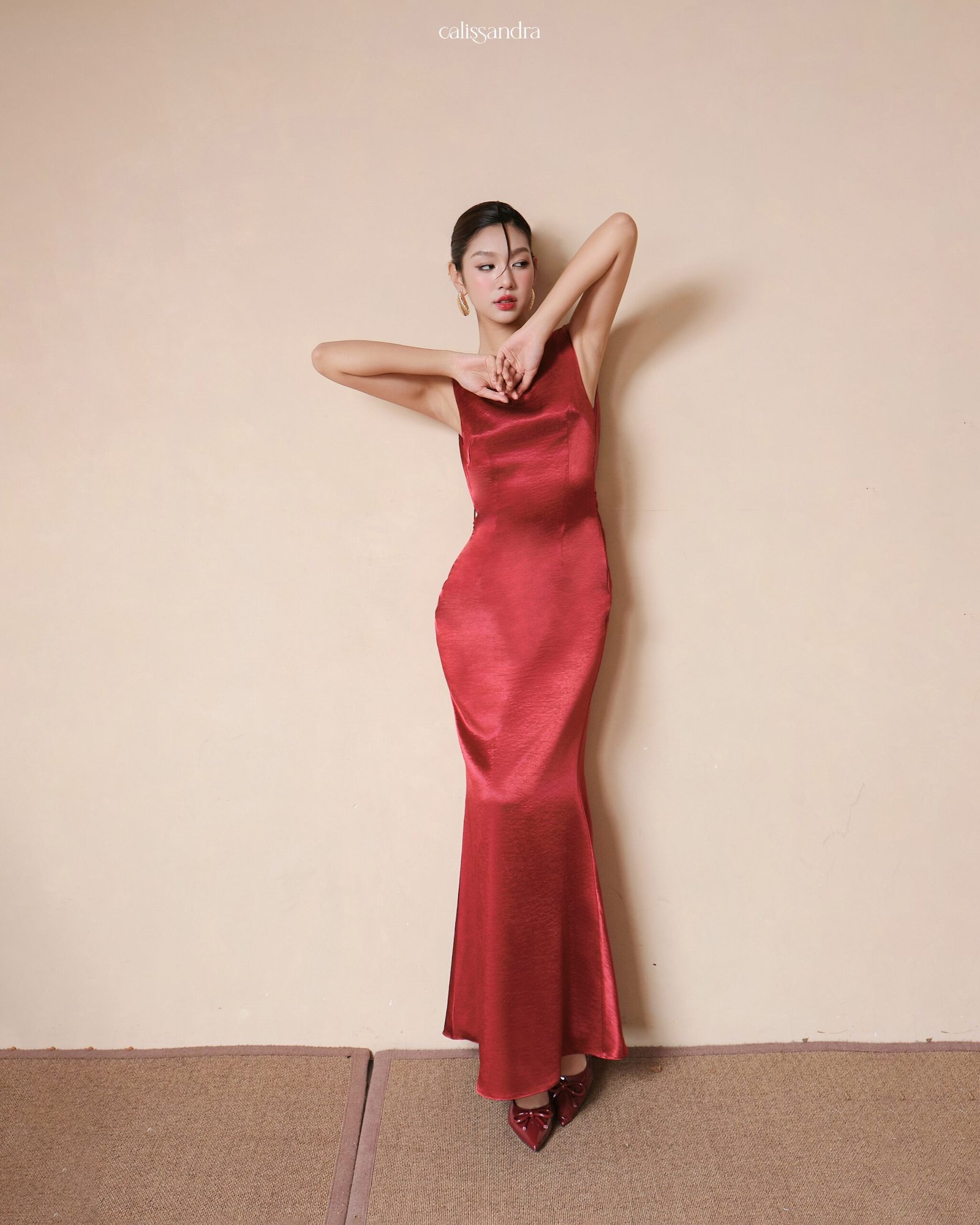
Choosing a silk evening dress is about more than seeing the word “silk” on a product page. The fibre, weave, lining, weight, cut and finishing details all affect how the dress looks, moves and feels during a real event. Use this checklist before ordering so you can compare dresses with confidence and choose a piece that suits both the occasion and your wardrobe.
1. Confirm the fibre and weave
Ask for the current composition label. Silk can be woven as satin, crepe, chiffon, charmeuse or a textured fabric, and each construction creates a different finish. A glossy satin reflects more light, while crepe looks softer and more matte. The label tells you the fibre; the weave tells you how that fibre behaves.
If the listing uses a collection name or a poetic fabric description, treat it as a starting point and request the exact composition when it matters. This is especially useful when comparing pure silk with a silk blend, or when you need a specific level of stretch and recovery.
2. Check the lining and opacity
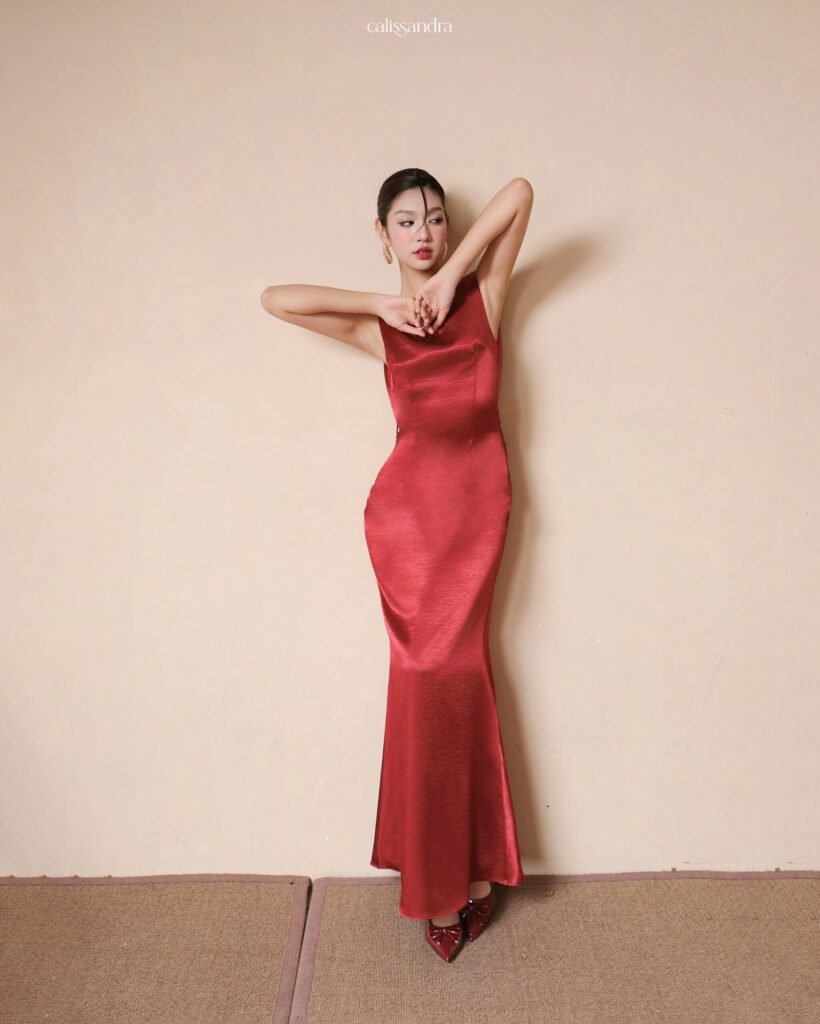
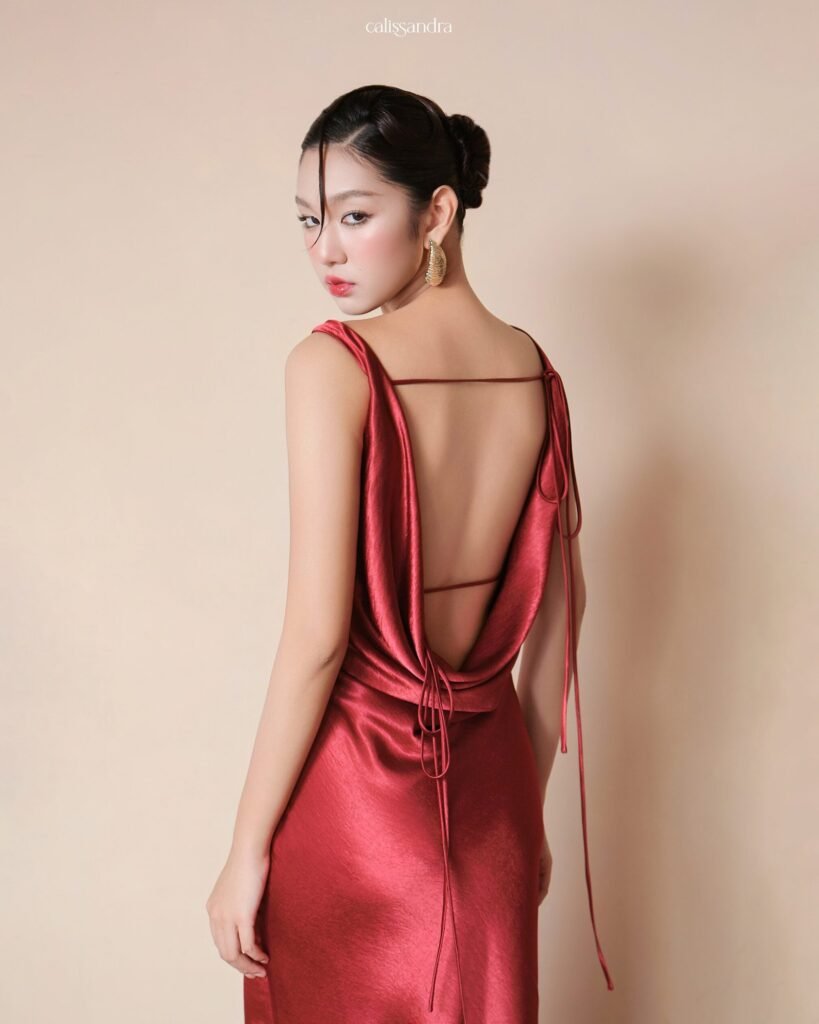
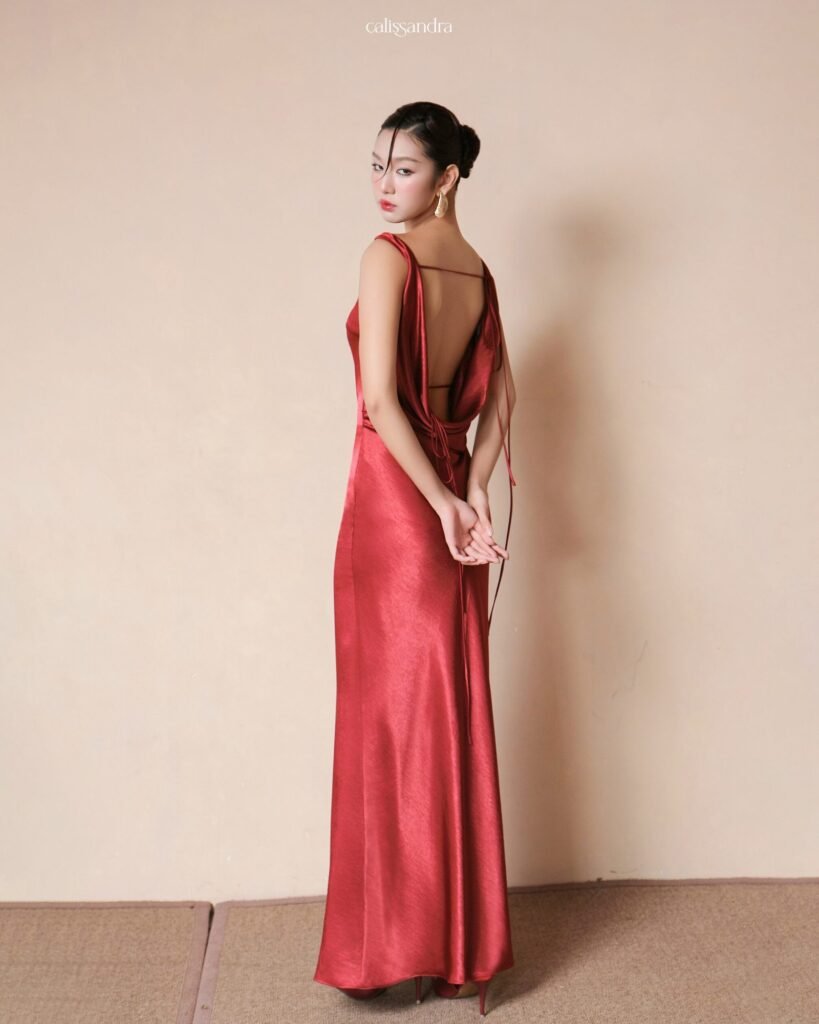
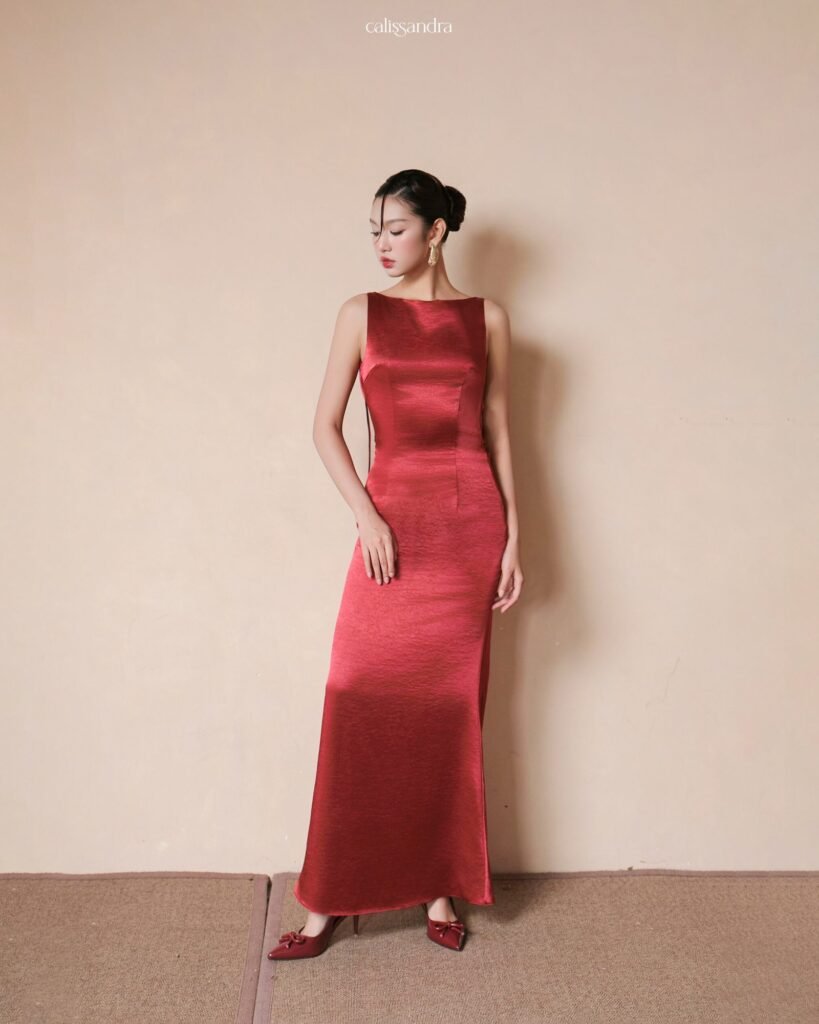
Look for front, side and back photographs in daylight. A pale or bias-cut dress can appear opaque in a studio image but become more transparent in strong natural light. Ask whether the bodice and skirt are lined, where the lining ends, and whether the lining has enough ease to move with the outer layer.
For an evening wedding or formal dinner, a clean lining also improves comfort. It helps prevent cling, reduces friction and gives the skirt a smoother fall when you sit, walk or dance.
3. Compare measurements with a dress you own
Do not choose a size from habit alone. Measure a dress that already fits you well and compare its bust, waist, hip and length with the product size guide. A bias cut follows the body differently from a structured bodice, while a draped skirt may need extra room at the hip even when the waist measurement looks correct.
Pay attention to the garment length and the shoes you expect to wear. If you are between sizes, contact the team before ordering so the fit can be reviewed against the silhouette and fabric.
4. Read the design for your occasion
Start with the invitation, venue and expected temperature. A fluid silk gown can be ideal for a hotel reception, while a lined midi or a more covered neckline may be easier for an outdoor ceremony. For a summer wedding, check whether the dress allows movement and whether the colour is appropriate for the dress code.
Think through the full look: shoes, underlayers, jewellery and a light cover-up. Try the same heel height at home and sit down in the dress before the event. A beautiful standing photograph is only one part of how a dress needs to perform.
5. Inspect finishing details
Zoom into the neckline, straps, seams, hem and closures. Even stitching, stable straps and a neat hem are useful signs of careful construction. If the dress has ruching, gathers or a draped panel, check how those details are placed on the body rather than judging them from a flat product image.
6. Choose with care in mind
Silk rewards gentle care. Follow the garment label, avoid rough jewellery that can catch the surface and store the dress in a breathable garment bag away from direct sunlight. Ask about cleaning before purchase, especially when the dress includes sequins, lace or layered lining.
Explore the Calissandra edit
Browse the Calissandra shop and compare silhouettes across the Promenade, Silken Prosperia and Aurora Couture collections. For fabric decisions, continue with How to Read a Silk Dress Label and Silk Dress Lining and Opacity. Always confirm the latest size, colour and care information on the individual product page before ordering.
Nhãn lụa nói về thành phần sợi, chưa nói hết cảm giác mặc. Kiểu dệt, lớp lót, độ dày và đường cắt quyết định đầm mềm rủ, đứng phom hay dễ lộ dưới ánh sáng mạnh.
Nhãn vải và hình ảnh cho biết điều gì?
Lụa là tên sợi chứ không tự bảo đảm độ rủ hay mức độ cao cấp. Kiểu dệt, trọng lượng, lớp lót và hoàn tất đều quan trọng. Người mua nên xem nhãn thành phần của mẫu đang bán trước khi suy từ ảnh hoặc tên sản phẩm.
Chi tiết làm thay đổi lựa chọn
So số đo với chiếc đầm đang mặc vừa. Nếu chân váy cắt xéo sợi hoặc thân trên ít độ cử động, hãy hỏi về phom trước khi chọn theo size quen thuộc.
Cách thử cho lựa chọn này
Hãy xem nhãn thành phần và ảnh chụp ban ngày; sau đó thử ngồi, bước đi và kiểm tra lớp lót trước khi chọn size. Với đám cưới, hãy đọc thiệp trước khi chọn màu quá nhạt hoặc quá nổi. Với tiệc tối, thử đúng giày và đồ lót dự định mặc. Một dáng đứng đẹp chỉ là một khoảnh khắc của cả ngày dài.
Chọn cho một dịp mặc thật
Xác định buổi tiệc, địa điểm và số giờ dự kiến mặc đầm. Sau đó so thiết kế với điều kiện đó thay vì chọn theo một từ khóa đơn lẻ. Xem cổ áo, lớp lót và chân váy qua ảnh trước, nghiêng và sau.
Khám phá và xác nhận
Bắt đầu từ cửa hàng. Đọc Lụa và satin khác nhau thế nào khi chọn đầm? để xem quyết định liên quan, rồi xem tiếp Cách đọc nhãn thành phần đầm lụa. Xác nhận chất liệu và tùy chọn hiện tại ở trang từng sản phẩm trước khi đặt hàng.